

Have you ever recognized a brand instantly, without reading a single word?
You see a color. A shape. A feeling. And you already know exactly who it is.
That moment of recognition is not an accident. It is the result of intentional, strategic brand identity work.
Yet for most businesses, influencers, and public figures, brand identity is one of the most misunderstood concepts in marketing. People confuse it with a logo. Or a color palette. Or a tagline.
Brand identity is all of those things, and it is also much more.
This guide breaks down what brand identity actually is, why it matters at every stage of your business, and how to start shaping one that works.
What Is Brand Identity?
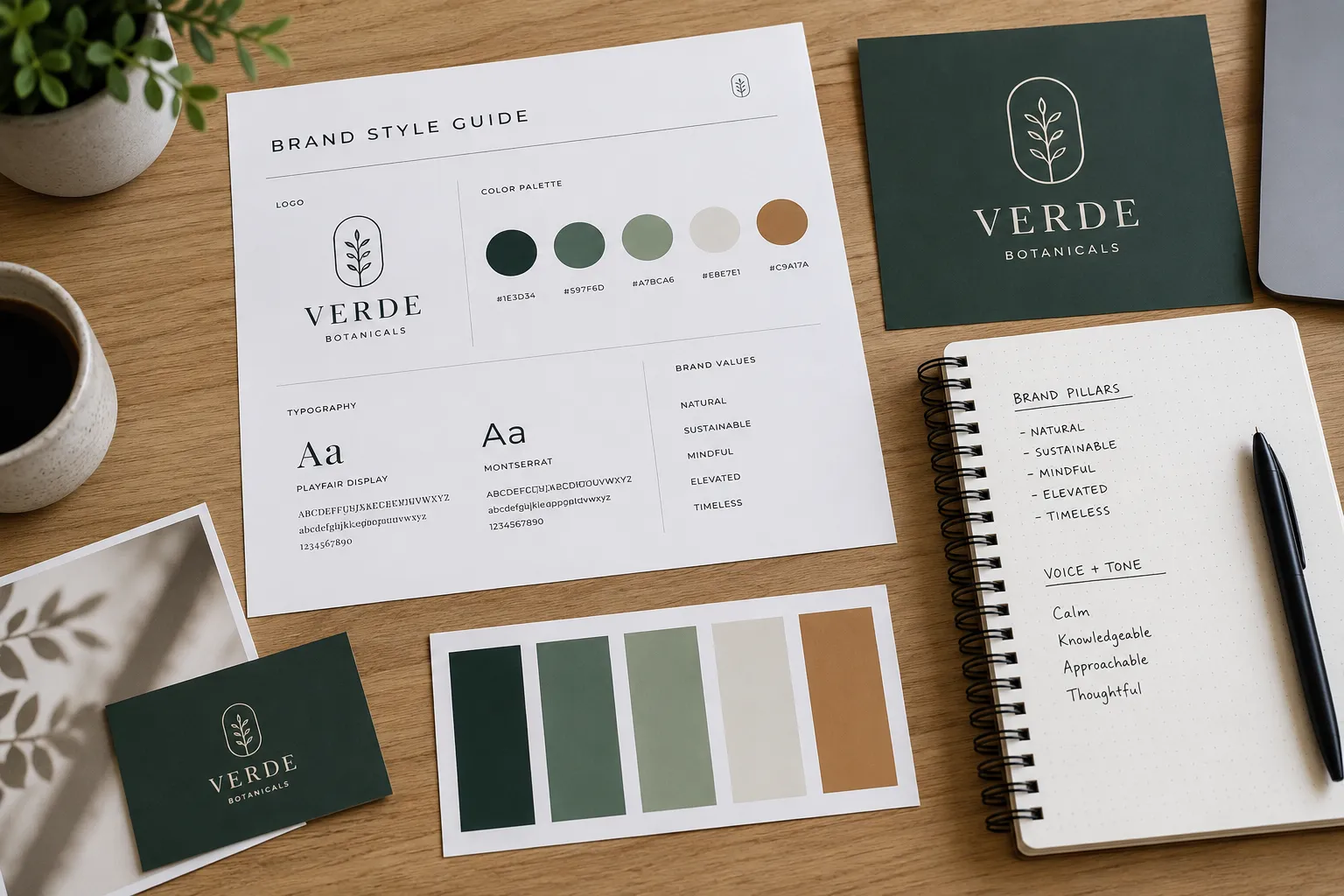
Brand identity is the collection of visual, verbal, and emotional elements that communicate who you are, what you stand for, and how you want to be perceived.
It is the system your business uses to show up in the world, consistently, credibly, and memorably.
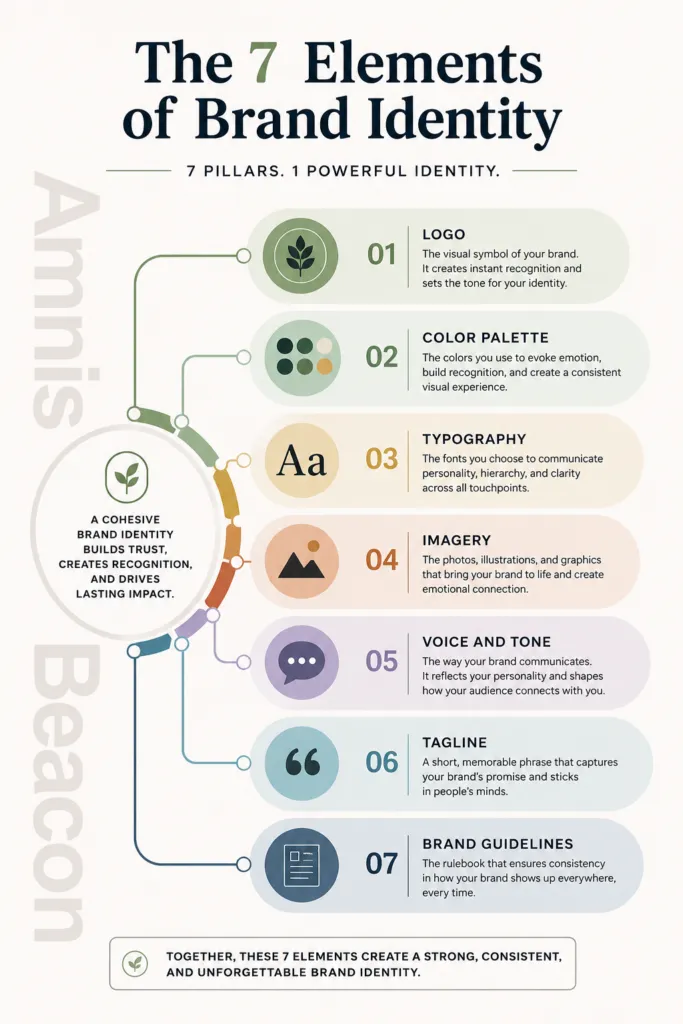
Brand identity includes:
- Your logo and logo variations
- Your color palette
- Your typography (the fonts you use)
- Your imagery style and photography direction
- Your tone of voice and messaging
- Your tagline or positioning statement
- The overall look and feel across every touchpoint
Think of it this way. Your brand is the reputation. Your brand identity is the expression of that reputation.
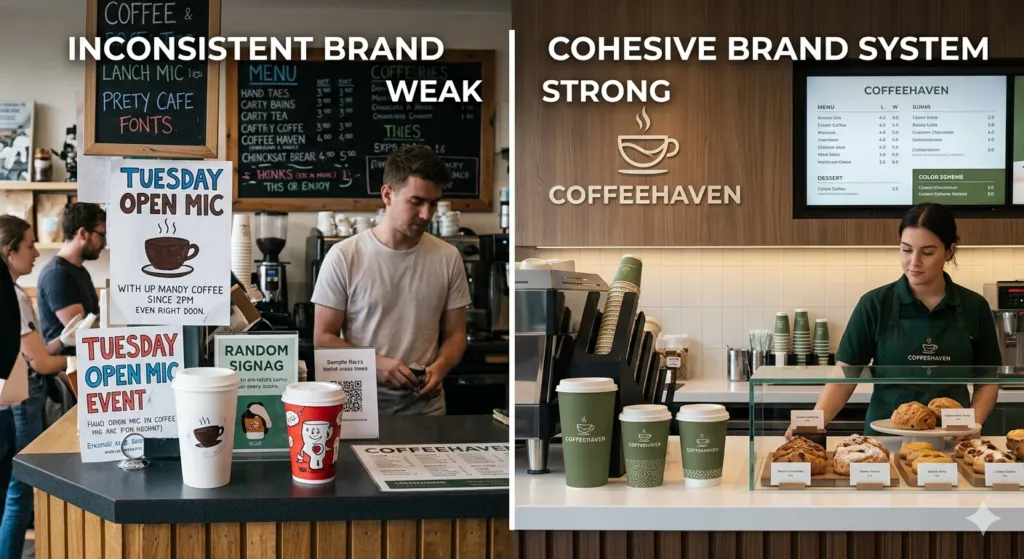
Without a clear identity, your brand becomes forgettable. Worse, it becomes inconsistent, and inconsistency destroys trust.
Brand Identity vs. Brand Image vs. Brand Strategy
These three terms are often used interchangeably. They are not the same thing.
Brand identity is what you intentionally create and put out into the world. It is controlled by you.
Brand image is how your audience actually perceives you. It is shaped by their experiences, emotions, and interactions with your brand.
Brand strategy is the long-term plan that guides how your brand grows, competes, and connects with its target audience.
All three are connected. Your identity informs your image. Your strategy drives your identity. When all three are aligned, your brand operates at its highest level.
Why Brand Identity Matters
Brand identity is not a luxury reserved for Fortune 500 companies. It is a business tool, and one of the most powerful ones available to you.
Here is why it matters:
It builds recognition. People need to see a brand 5 to 7 times before they remember it. A consistent, well-designed identity accelerates that process. Every time someone encounters your brand and it looks and sounds the same, that impression stacks. Recognition builds familiarity. Familiarity builds trust.
It builds trust. Inconsistency is one of the biggest silent killers of business credibility. When your Instagram looks nothing like your website, and your website sounds nothing like your emails, customers sense the disconnect, even if they cannot name it. A cohesive identity communicates professionalism and signals that you take your business seriously.
It attracts the right audience. A clearly defined brand identity speaks directly to the people you want to serve. It signals alignment before a conversation ever takes place. Your ideal client sees your brand and thinks, “This is for me.”
It supports pricing power. Brands with strong identities can charge more. Not because they have a prettier logo, but because they have built perceived value. When your brand communicates credibility and authority, customers expect to invest accordingly.
It gives your team direction. Brand identity is not just an external tool. Internally, it becomes the standard. It answers questions like: What colors do we use? How do we write an email? What does our voice sound like? When your team has those answers, they operate with more confidence and consistency.

The Key Elements of a Strong Brand Identity
1. Logo System
Your logo is the anchor of your visual identity. A strong logo system includes your primary logo, a simplified icon version, and a wordmark, giving you flexibility across different sizes and contexts.
A well-designed logo is simple, scalable, and meaningful. It is not trendy. It is built to last.
2. Color Palette
Color is one of the fastest ways to trigger recognition and emotion. Research consistently shows that color increases brand recognition by up to 80 percent.
Your brand palette should include a primary color, one or two secondary colors, and neutral tones. Every color should be intentional, chosen to reflect your brand’s personality and appeal to your target audience’s psychology.
3. Typography
The fonts you choose communicate personality before anyone reads a single word. A law firm and a children’s brand communicate differently through typography alone.
Your typography system should include a primary heading font and a secondary body font. Stick to your system across all materials to maintain consistency.
4. Voice and Tone
Brand identity is not just visual. The way you write and speak is part of your identity.
Voice is consistent. It reflects your brand’s character, whether that is direct, warm, authoritative, playful, or some combination. Tone shifts based on context. You may be more formal in a press release than in a social media caption, but the underlying voice stays the same.
5. Imagery and Photography Style
The images you use, whether on your website, social media, or marketing materials, carry meaning. Do they feel polished or candid? Warm or cool? Lifestyle-focused or product-focused?
Defining your imagery direction ensures that every photo you use reinforces your identity rather than diluting it.
6. Brand Guidelines
A brand identity system is only as strong as the rules that govern it. Brand guidelines document everything, how to use your logo, which colors go where, which fonts at which sizes, and how to write in your brand’s voice.
This is especially important once more than one person touches your brand.
Real-World Brand Identity Examples
Apple built an identity around simplicity, minimalism, and innovation. Their visual system, clean whites, precise typography, and product-focused imagery, communicates this at every touchpoint. The identity and the product experience are inseparable.
Nike built an identity around motivation, athleticism, and human potential. Their swoosh logo, bold typography, and emotionally-charged imagery have made them one of the most recognized brands in the world. Their voice is direct, powerful, and human.
A local boutique consulting firm that uses the same professional color palette, consistent logo placement, and a clear confident voice across their website, proposals, and social media will be perceived as more credible than a competitor with twice the experience and half the brand clarity.
Brand identity works at every level. The principles are the same whether you are building a global brand or a personal one.
Common Brand Identity Mistakes to Avoid
Using too many colors or fonts. More variety does not mean more personality. It means less recognition. Stick to your system.
Designing a logo in isolation. A logo without a surrounding identity system is just a graphic. Brand identity is the full picture.
Copying competitors. Your identity should differentiate you, not blend you into the landscape. Study your competitors so you can go in a different direction.
Changing your identity too often. Consistency builds recognition over time. Frequent rebranding resets the clock. Evolve intentionally, not reactively.
Ignoring the verbal side of identity. Many businesses invest in visuals and completely neglect their voice, messaging, and tone. Both matter.
How to Start Shaping Your Brand Identity
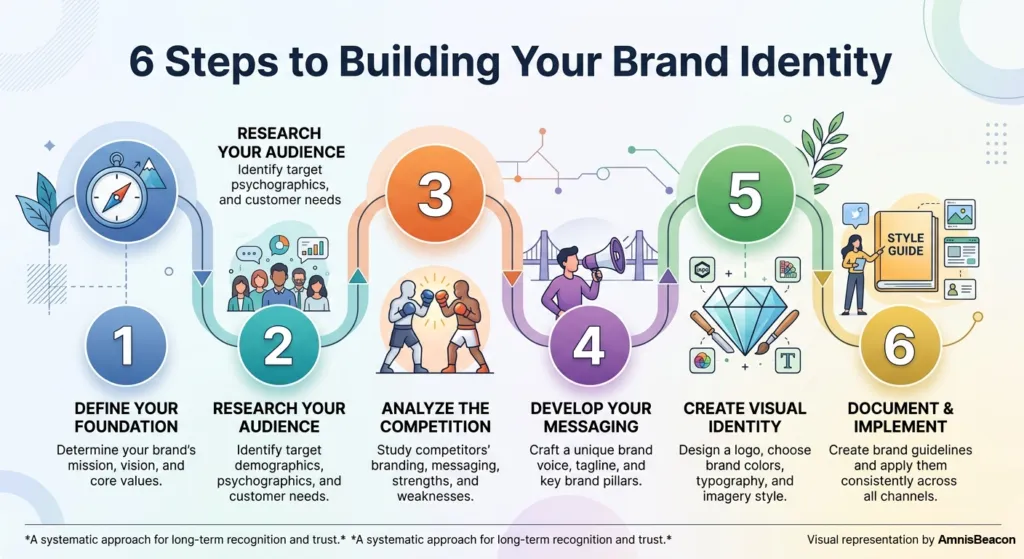
You do not need a massive budget to build a strong brand identity. You need clarity, consistency, and intentional decisions.
Start here:
Step 1 – Define your foundation. Who are you? Who do you serve? What do you stand for? What makes you different? These questions are not marketing fluff, they are the strategic foundation everything else is built on.
Step 2 – Know your audience. Your brand identity should speak directly to the people you want to attract. Understand their psychology, their values, and what signals credibility to them.
Step 3 – Audit what you already have. Look at your current visuals, website, social media, and messaging. Is it consistent? Does it reflect who you are today? What needs to change?
Step 4 – Build your visual system. Logo, color palette, typography, imagery direction. Start simple and build from there.
Step 5 – Define your voice. Write down how your brand sounds. Create a few examples of what your brand would and would not say. Share it with anyone who writes on behalf of your brand.
Step 6 – Document it. Create a brand guidelines document, even a simple one. This protects your identity as your business grows.
Final Thoughts
Brand identity is not about having a pretty logo or a nice color palette. It is about clarity. It is about showing up consistently so that your audience knows exactly who you are, what you offer, and why it matters to them.
When your identity is clear, your marketing gets easier. Your credibility grows. Your audience grows with you.
The businesses and public figures that invest in a cohesive brand identity do not just look better. They perform better, because trust is the currency of every decision a customer makes.
If you are ready to build a brand identity that reflects the quality of your work and attracts the right people, that is exactly what we do at Amnis Beacon.
Explore our Brand Identity services or get started with the Brand Starter Kit.
Amnis Beacon specializes in brand identity and brand strategy consulting for businesses, public figures, and influencers. We combine analytics, psychology, and market intelligence to help you build a brand that is credible, consistent, and built to grow.